The term "Wreath", curiously enough, is linked to our word "Wrist", with both terms forming a continuous physical circular shape. It also came from Middle English's "Wreathe", meaning a twisted band or ring of leaves or flowers in a garland.
Wreaths have been used symbolically to centuries. The circle or ring shape is symbolic of eternity or eternal life, because the shape has no beginning or end. Back in ancient Rome, this symbol became so powerful that people used decorative wreaths as a sign of victory. Some believe that this is where the hanging of wreaths on doors came from.
Putting plants into the symbolic circular shape symbolises the strength of life overcoming the forces of Winter. Wreaths and other decorations during long Winters often consisted of whatever natural materials looked attractive at this bleak time of year. People used candles, firs, evergreens, hollies, berries and forced blossoms to hold on to the promise of Spring.
The ancient Druids are the first society in known history to have worn sprigs of holly and mistletoe. These priests of yesteryear believed that holly, with it's glossy, shiny, prickly leaves of green, adorned with red berries, remained green all year due to their magical properties. The Druids considered holly sacred. Many speculate the holly berries have given us our red and green colours of Christmas.
While there are many designs and styles of Christmas wreaths, they mainly fall into two categories;
the decorative Christmas wreath,
and the advent wreath.
The decorative Christmas wreath is made simply for crafts and holiday decorations, similar in use to Christmas lights. These have a different purpose to other types of wreath. Wreaths give a house or office the "finishing touch" to the holiday decorations. Their symbolism and look just give the area a little extra Christmas feeling. Decorative Christmas wreaths are usually made of everygreen leaves, holly, or other materials, which symbolise life throughout tough Winters.
The Advent wreath is a tradition that is a part of folklore from centuries ago. The pre-Christian Germanic people during the cold December darkness of Eastern Europe, gathered wreaths and lighted fires as signs of hope in the coming Spring and renewed light. The 16th century Catholics and Protestants used wreaths as symbols to celebrate their hope in Christ, the everlasting light. From Germany, the use of the Advent wreath spread to other parts of the world.
Traditionally, the Advent wreath is made of four violet or rose candles in a circle of evergreen, with a fifth candle in the middle. Each day at home, the candles are lighted before the evening meal, one candle for the first week, and then another each succeeding week until December 25th. The last candle is the middle candle of the wreath. The lighting of this candle takes place on Christmas Eve and represents the birth of Jesus Christ.

Flowers, floral arrangements and gifts handmade in South Yorkshire. Arrangements and bouquets for all occasions.
Free Local Delivery - Visit Website
Showing posts with label tradition. Show all posts
Showing posts with label tradition. Show all posts
Friday, 15 December 2017

Sunday, 16 April 2017
Easter Eggs
On Easter Sunday millions of us will be tucking into delicious chocolate eggs as the Christian world celebrates.
But while many will be at least vaguely familiar with the story of Easter, its relation to eating mountains of oval-shaped chocolate treats is less clear.
So how did it come about? Easter celebrates the resurrection of Jesus after his crucifixion. Christians believe Jesus was crucified on Good Friday and rose again three days later. The three days are known as the Easter Triduum.
Even before the birth of Christianity, the egg was seen as a symbol of Spring, a celebration of the rebirth and reinvigoration after the harshness of winter.
Even before the birth of Christianity, the egg was seen as a symbol of Spring, a celebration of the rebirth and reinvigoration after the harshness of winter.
Eggs would then be cracked against one another, leaving just empty shells - a symbol of the empty tomb Jesus left behind.
The tradition survives today in the shape of egg rolling, representing the rolling away of the rock from Jesus' tomb.
Over time, Easter eggs became more and more elaborately decorated, perhaps most famously by Russian jeweler Peter Carl Fabergé, creator of the priceless Fabergé eggs as Easter gifts for Tsars Alexander III and Nicholas II.
Over time, Easter eggs became more and more elaborately decorated, perhaps most famously by Russian jeweler Peter Carl Fabergé, creator of the priceless Fabergé eggs as Easter gifts for Tsars Alexander III and Nicholas II. The introduction of chocolate eggs is a relatively new phenomenon, originating in France and Germany in the 19th century.
Easter is currently a "movable feast" - a date determined by the lunar calendar rather than the normal Gregorian or Julian calendars, which follow the cycle of the sun.
So how did it come about? Easter celebrates the resurrection of Jesus after his crucifixion. Christians believe Jesus was crucified on Good Friday and rose again three days later. The three days are known as the Easter Triduum.
Even before the birth of Christianity, the egg was seen as a symbol of Spring, a celebration of the rebirth and reinvigoration after the harshness of winter.
Even before the birth of Christianity, the egg was seen as a symbol of Spring, a celebration of the rebirth and reinvigoration after the harshness of winter.
Eggs would then be cracked against one another, leaving just empty shells - a symbol of the empty tomb Jesus left behind.
The tradition survives today in the shape of egg rolling, representing the rolling away of the rock from Jesus' tomb.
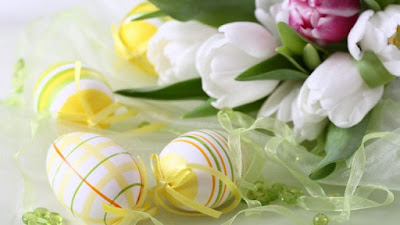
Over time, Easter eggs became more and more elaborately decorated, perhaps most famously by Russian jeweler Peter Carl Fabergé, creator of the priceless Fabergé eggs as Easter gifts for Tsars Alexander III and Nicholas II.
Over time, Easter eggs became more and more elaborately decorated, perhaps most famously by Russian jeweler Peter Carl Fabergé, creator of the priceless Fabergé eggs as Easter gifts for Tsars Alexander III and Nicholas II. The introduction of chocolate eggs is a relatively new phenomenon, originating in France and Germany in the 19th century.
Easter is currently a "movable feast" - a date determined by the lunar calendar rather than the normal Gregorian or Julian calendars, which follow the cycle of the sun.
Subscribe to:
Posts (Atom)